
Transformer Oil Regeneration Plant DC-12R
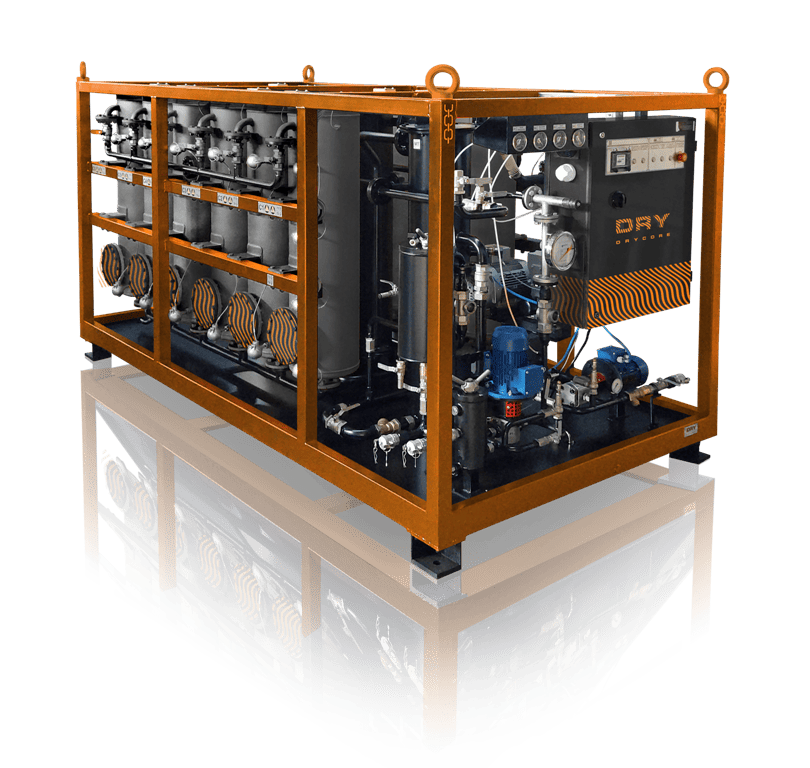
The transformer oil regeneration plant DC-12R is a solution designed to restore the dielectric strength and chemical stability of aged transformer oil. Since the service life of a power transformer largely depends on the condition of its insulation system, maintaining oil purity is essential for reliable operation. The insulation system includes both insulating liquid (transformer oil) and solid insulation (cellulose-based materials). Transformer oil provides around 80% of electrical strength inside the transformer, while the solid insulation supports the mechanical structure. Studies show that nearly 85% of transformer failures occur due to degradation of insulation system — a process that can be effectively slowed or reversed through regular oil regeneration with the DC-12R plant.
Transformer oil ensures insulation and cooling of a transformer. Its low viscosity enables efficient heat transfer from the windings to the cooling system. Stabilized oil resists oxidation and prevents the formation of harmful by-products, thus extending transformer service life. The transformer oil regeneration plant DC-12R by DRYCORE is specifically designed to perform this function efficiently, ensuring long-term operational reliability.
Causes of transformer oil aging
The aging or deterioration of transformer oil is primarily caused by oxidation. When oxygen and moisture come into contact with hot oil, chemical reactions occur that produce acids, sludge, and other polar compounds. These contaminants, together with heat and water, accelerate the degradation of both the oil and the cellulose insulation.
Moisture is particularly harmful. Even a small increase in water content can significantly shorten insulation lifespan — for example, an insulation system with 1% moisture ages up to ten times faster than that with only 0.1% moisture. Contaminants such as acids, aldehydes, and alcohols form sludge that settles on transformer tank walls, windings, and cooling channels. This sludge increases oil viscosity, reduces cooling efficiency, and contributes to overheating and further oxidation.
Transformer oil regeneration plant DC-12R
The transformer oil regeneration plant DC-12R by DRYCORE restores used and oxidized transformer oil to its original dielectric and chemical properties. The process is based on continuous circulation of the oil through a regeneration system. The oil is drawn from the transformer tank bottom, then passed through a series of adsorption columns that remove aging by-products such as acids, oxidation compounds, and sludge. These contaminants are captured by specialized adsorbent materials that restore the stability and color of oil. Optionally, after adsorption, the oil undergoes fine filtration and vacuum dehydration in the machines of DC-D series, efficiently eliminating the residual moisture and dissolved gases. Once treated, the oil is returned to the transformer top, completing the cycle and allowing the process to continue until the required dielectric strength and purity levels are achieved.
Transformer oil regeneration vs. filtration
It is important to distinguish between oil regeneration and simple filtration. Filtration removes only mechanical impurities and free water, but cannot eliminate dissolved oxidation products such as acids, aldehydes, and ketones. As a result, filtration alone cannot restore the original color or insulating properties of the oil. In contrast, regeneration is a comprehensive treatment that removes chemical degradation products, restores oil color, improves dielectric strength, and brings the oil’s properties close to those of new oil.
The DRYCORE DC-12R transformer oil regeneration plant is designed to perform full-scale oil restoration, enabling the same oil to be reused for decades. When properly maintained, regenerated oil can match the performance of new oil and extend transformer service life by up to 40–60 years.
Replacing large volumes of transformer oil is both expensive and environmentally challenging. Regeneration using the DRYCORE DC-12R significantly reduces waste, operating costs, and environmental impact. The restored oil can remain in service for an indefinite period, provided that reprocessing is carried out at regular intervals, making it a sustainable and cost-effective alternative to disposal and replacement.