
Transformer oil drying machine DRYCORE for High-Voltage Oil Treatment
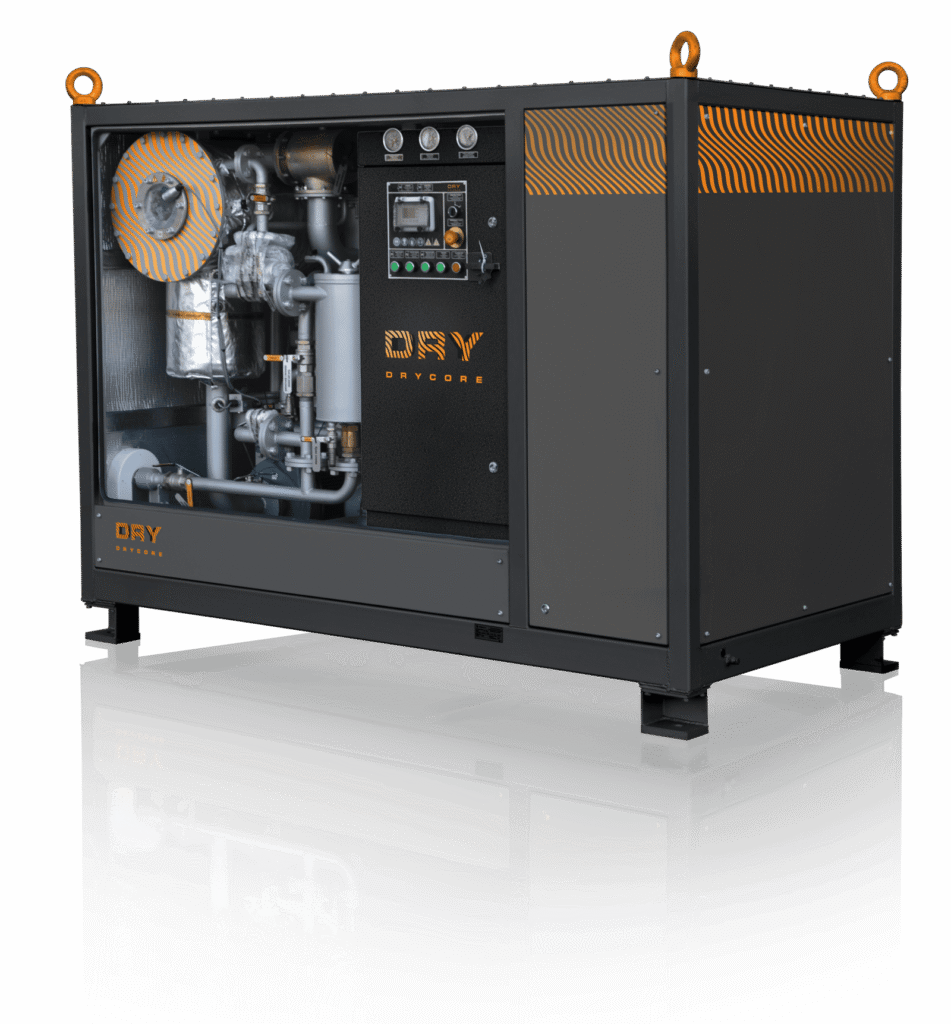
The transformer oil drying machine DRYCORE is developed for deep dehydration, degassing, and purification of insulating oils used in high-voltage electrical equipment. With the continuous growth of transformer voltage ratings, the requirements for oil quality during installation and operation have become significantly stricter. Manufacturers of power transformers specify vacuum treatment of transformer tanks and oil degassing procedures to extend insulation life and ensure stable long-term performance.
The Role of Insulation in Electrical Equipment
Transformer oil functions simultaneously as a dielectric medium and as a cooling fluid. It is used in power transformers, on-load tap changers (OLTC), transformer bushings, reactors, and high-voltage switches. Its dielectric strength directly affects insulation performance, while its thermal conductivity ensures efficient heat dissipation from windings and core components.
Fresh insulating oil is free from moisture and solid contaminants. However, during service life, the oil accumulates impurities such as fibers, dust, metallic particles, and dissolved varnish residues. These mechanical contaminants form suspended sediments that reduce dielectric strength. Over time, sludge deposits build up on windings and oil channels, impairing heat transfer and accelerating insulation aging.
Moisture is one of the most critical factors influencing transformer reliability. Water enters the oil from the atmosphere or forms as a by-product of chemical reactions inside the transformer. Even small amounts of dissolved moisture significantly lower dielectric strength, especially in high-voltage systems. This makes regular treatment with a transformer oil drying machine essential for maintaining safe operating conditions.
Contaminants and Their Effect on Oil Properties
As transformers operate for years under thermal and electrical stress, the oil undergoes gradual chemical changes. Oxidation leads to the formation of acids and resinous compounds. Sulfur and nitrogen compounds may also accumulate. These substances deteriorate both chemical stability and electrical characteristics.
The primary objective of oil purification is the removal of dissolved gases, moisture, solid particles. Without proper treatment, increased contamination results in higher dielectric losses, reduced breakdown voltage, overheating, and accelerated aging of insulation materials.
Transformer oil drying machine DRYCORE
The DRYCORE transformer oil drying machine integrates heating, multi-stage filtration, vacuum dehydration, and degassing into a single technological process. The oil is first preheated to approximately 194°F (90°C), which reduces viscosity and improves the efficiency of moisture separation. It then enters a deep vacuum chamber where pressure reduction lowers the boiling point of water, allowing rapid evaporation of both free and dissolved moisture.
Inside the vacuum chamber, the oil is finely dispersed to increase its contact surface with the vacuum environment. This design significantly enhances moisture and gas extraction while preserving the chemical structure of the oil. At the same time, multi-stage fine filtration removes mechanical impurities down to 5 microns, ensuring high cleanliness levels according to ISO 4406 class 16/14/12.
After processing in the transformer oil drying machine, the oil achieves a volumetric gas content of no more than 0.1%, moisture content up to 10 ppm, and dielectric strength of at least 70 kV. These parameters correspond to the requirements for servicing high-voltage transformers and related electrical equipment.
Vacuum Evacuation of Transformer Tanks
In addition to oil purification, the DRYCORE transformer oil drying machine performs vacuum evacuation of transformer tanks during maintenance or installation. When a transformer is opened for repair, atmospheric air and moisture may enter the system. Deep vacuum processing removes residual air and dissolved gases from internal cavities, preventing oxidation and minimizing the risk of partial discharge.This function is especially important for transformers operating at voltages above 110 kV, where insulation systems are highly sensitive to moisture and gas inclusions. Proper evacuation improves oil impregnation of insulation materials and increases overall dielectric reliability.