
Transformer Oil Recovery DRYCORE Solutions
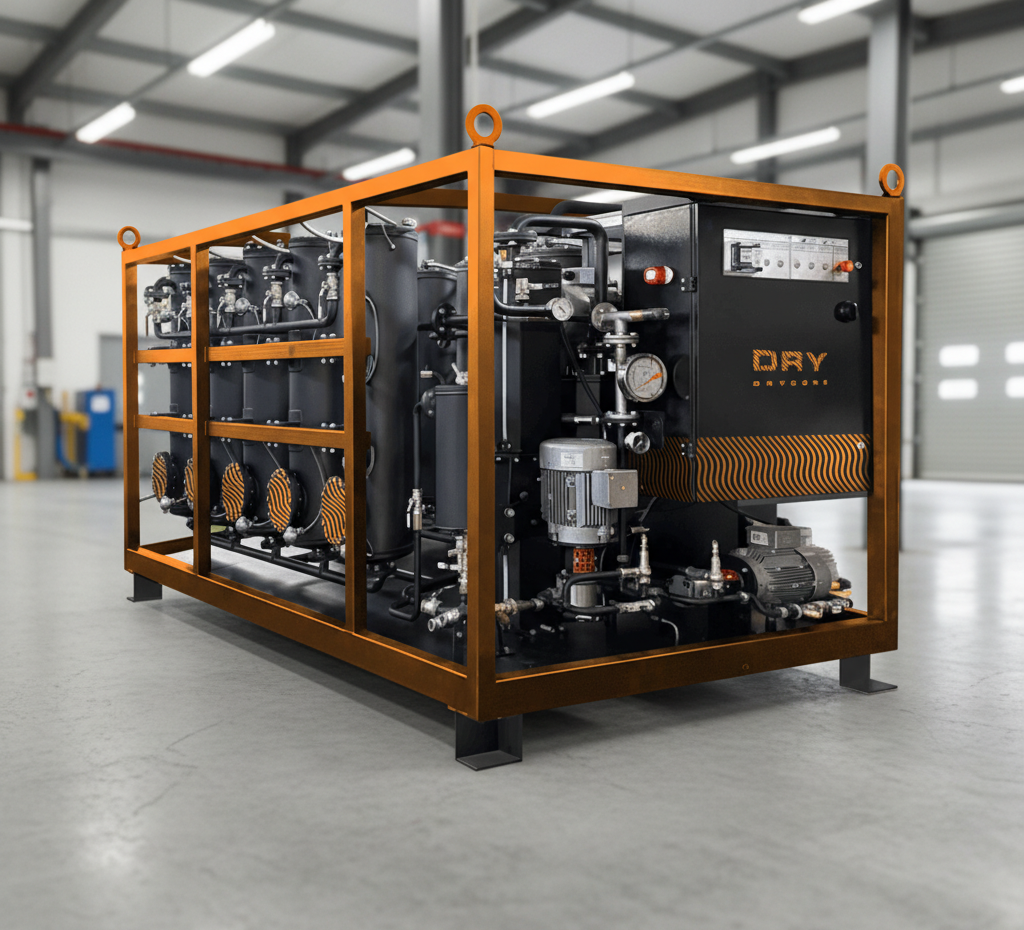
Transformer oil recovery at the transformer’s operational site is an important part of preventive transformer maintenance. Insulating oil provides up to 80% of electrical strength inside a transformer. Transformer oil performs several functions, in particular cooling and insulating of current-carrying elements and serves as an essential component of transformer insulation. The quality of the oil directly affects the reliability and lifespan of power transformers.
The Role of Transformer Oil in Transformer Reliability
Transformer oil serves not only as a cooling medium, but also as an electrical insulator. Over time, the oil loses its insulating and physical properties due to oxidation and contamination by water, gases, and solid particles. In such cases, professionals are faced with the task of purifying and regenerating the oil to restore its original characteristics and extend the service life of the transformer.
The aging or deterioration of insulating oil is usually associated with oxidation. When oxygen and water enter the oil, oxidation occurs even under normal operating conditions. Contaminants originating from transformer materials and dissolving in the oil also affect its condition. Reactions between unstable hydrocarbons, oxygen, moisture, and heat accelerate oil decomposition. Acids formed during oxidation adversely affect cellulose insulation and metals, leading to the formation of sludge, metal soaps, aldehydes, and alcohols. These byproducts settle on the transformer insulation, the inner walls of the tank, breathers, and cooling system components. Sludge develops more rapidly in heavily loaded or overheated transformers, increasing oil viscosity and reducing cooling efficiency.
Transformer Oil Recovery in DC-R units
In cases of severe oil degradation, after mechanical and vacuum treatment, the transformer oil recovery process in DC-R equipment begins. Regeneration removes dissolved oxidation products and restores the oil’s antioxidant properties. One of the most effective methods involves the use of adsorbents capable of removing oxidized compounds and acids, thereby restoring the chemical properties of the oil.
During transformer oil recovery, the adsorbent is automatically reactivated after each cycle or upon reaching full saturation at any stage of the process. This enables repeated use without the need for replacement or disposal after every cycle. Regeneration proceeds continuously without shutdowns for maintenance, saving time and costs while reducing environmental impact.
Preventing Solid Insulation Degradation
During aging, transformer insulating oil oxidizes and begins to degrade, forming by-products, sludge, acids, and other contaminants that accumulate in cellulose insulation. As a result, the oil becomes aggressive toward the insulating paper, initiating its degradation, which can eventually lead to catastrophic transformer failure.
The regeneration process removes both sludge and by-products formed in the oil and within the cellulose insulation, thereby halting paper degradation. This process should be carried out before the acid number of oil exceeds 0.08 mg KOH/g. Fully regenerated transformer oil can be restored to a condition comparable to new, and with proper maintenance, its service life can be extended for an indefinite period. Considering the high cost of new oil, regeneration of heavily oxidized oil is a practical and cost-effective solution.
Transformer oil recovery using DC-R equipment provides a comprehensive on-site solution, ensuring reliable transformer operation. Properly regenerated oil protects insulation, improves cooling efficiency, and ensures long-term operational reliability.