
Transformer Insulation Drying
Transformer insulation is a resource-defining component. Its aging directly determines whether a transformer will operate reliably for 20, 30, or even 40+ years. Research has shown that the aging rate of cellulose insulation increases significantly with temperature: at 212 °F, cellulose may reach end-of-life in approximately 20 years, while at 230 °F, the same degradation can occur in just 5 years. Therefore, replacing transformers strictly based on a nominal service life of 25 years is often unnecessary if the insulation condition remains within safe operational limits.
Under normal operating conditions, replacing a transformer strictly based on its nominal 25-year service life is often not economically justified. However, by 25–30 years, insulation typically accumulates dangerous levels of moisture, which significantly reduces dielectric strength and reliability.
Traditional methods of Transformer Insulation Drying
Traditionally, transformer insulation drying has been part of major overhaul procedures, which can account for 25–50% of total maintenance time. Conventional drying methods-such as hot oil circulation, thermodiffusion, and oil spraying-require complex equipment, highly trained personnel, and considerable financial investment. Moreover, aggressive drying methods can introduce unintended negative effects: exposure to elevated temperatures or vacuum-assisted moisture removal can mechanically stress the cellulose fibers, accelerating insulation aging and reducing the degree of polymerization by 50–250 units. Heated oil can also oxidize, producing aging byproducts that further degrade the insulation. In addition, the operational demands of electrical networks often make it impossible to take transformers offline for extended periods for maintenance.
In these circumstances, technologies that enable moisture reduction without removing the transformer from service are particularly valuable. Instead of targeting the solid insulation directly, the focus shifts to drying the insulating oil. Since moisture in a loaded transformer naturally migrates from the cellulose paper into the oil, removing water from the oil indirectly dries the solid insulation as well.
DC-260D and DC-260DH Online Transformer Drying Systems
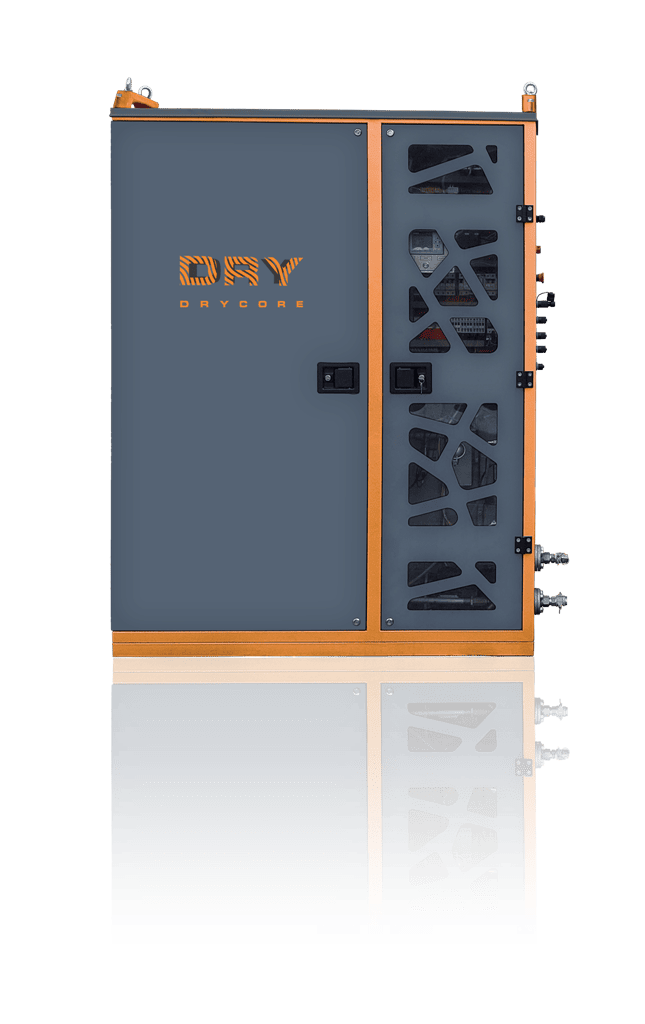
Two cutting-edge solutions designed for online transformer drying are the DC-260D and DC-260DH systems, both utilizing the DRYCORE technology. These systems enable continuous, on-line drying of transformer insulation, including both the oil and the cellulose paper, without requiring the transformer to be taken offline.
Operating Principle:
The transformer oil circulates through a closed loop system.
The oil passes through a series of sorbent cartridges that actively remove moisture.
The dried oil is returned to the transformer, gradually reducing the moisture content in the solid insulation as well.
Both systems are equipped with real-time monitoring and control units. Moisture content (in ppm) and temperature sensors are installed at the inlet and outlet of the system, allowing operators to track drying progress and the amount of water removed. These sensors also signal when cartridge replacement is necessary, ensuring continuous and efficient operation.
Advantages of DC-260D/DC-260DH Systems:
Compared to traditional drying methods, DC-260D and DC-260DH systems offer:
- No Outage Required
Drying is performed while the transformer remains energized.
- No Damage to Cellulose Insulation
No thermal or vacuum stress → preserves polymerization degree.
- Continuous Moisture Control
Prevents re-accumulation of moisture over time.
- Reduced Operational Costs
No need for large crews or complex logistics.
- Improved Asset Life Extension
Supports long-term transformer fleet management strategies.
These solutions are particularly suitable for large power transformers rated at 110 kV and above, where traditional drying methods would be cumbersome, risky, and costly.
As power systems become more complex and reliability requirements increase, the question is no longer whether to dry transformer insulation-but:How can it be done continuously, safely, and without interrupting operation? Online indirect drying technologies provide a clear and practical answer.